
Key takeaways:
- Feel matters more than figures. Balance, steering, and chassis feedback define the BRZ.
- Both manuals and automatics deliver. Choose based on your driving style and daily needs.
- Usable every day. Cabin comfort, visibility and boot space make daily driving realistic.
- Ownership is predictable. Simple mechanics and capped-price servicing keep costs manageable.
- Drive it often. The BRZ rewards regular use, not storage for those ‘special occasions.’
- Connected over flashy. The BRZ prioritises driver engagement over straight-line performance or technology overload.
From late-night coastal drives to early-morning runs through the Perth Hills, the Subaru BRZ has always appealed to a very specific kind of driver. Not the one chasing the biggest numbers. Not the one looking to impress at the lights. But the driver who values balance, connection and the feeling of being genuinely involved behind the wheel.
In a market crowded with heavy, turbocharged performance cars and increasingly digital driving experiences, the Subaru BRZ stands apart. It’s light. It’s rear-wheel drive. And it’s built from the ground up as a driver’s car.
If you’re considering a Subaru BRZ but still weighing up practicality, ownership costs, reliability and how it fits into everyday Australian life, this guide is for you. We’ll skip the marketing spin and get straight to what really matters, addressing common misconceptions and showing what life with a BRZ really looks like in Western Australia.
What makes the Subaru BRZ different
While many modern sports cars compete on power figures and tech features, the Subaru BRZ takes a different path. It was built with one clear goal: to bring real driver engagement back to the road.
That philosophy shows up everywhere in the Subaru BRZ:
- A low-mounted boxer engine that keeps the centre of gravity close to the ground.
- A lightweight chassis that allows the suspension to work as intended.
- Rear-wheel drive that delivers natural balance and feedback through corners.
Together, these design choices create a driving experience that feels deliberate and unfiltered. Rather than relying on turbocharging, adaptive systems or artificial sound enhancement, the Subaru BRZ takes the opposite approach. It prioritises mechanical honesty.
And that’s what sets it apart: the BRZ doesn’t chase hype; it chases connection.
Subaru BRZ performance: What it’s really like to drive
On paper, the Subaru BRZ’s performance figures can look modest compared to turbocharged rivals. But if you’re judging it purely by numbers, you’re missing the point.
The BRZ is designed to feel alive in a way many modern sports cars just don’t. This is especially true at everyday speeds. What you will notice first is the way it responds:
- Linear power delivery that builds smoothly through the rev range.
- Sharp throttle response that rewards precise inputs.
- Communicative steering that tells you exactly what the front tyres are doing.
- Predictable rear-wheel drive balance that encourages confidence through corners.
Because the BRZ doesn’t rely on turbo boost, power arrives smoothly and predictably. That encourages drivers to stay involved, explore the rev range, and actually enjoy the drive.
On winding roads — like the Perth Hills or South West backroads — this matters far more than straight-line acceleration. The BRZ feels alive and connected at legal speeds, which is something many modern performance cars really struggle to achieve.
If you want a deeper technical breakdown, our BRZ engine explainer covers exactly how Subaru’s flat-four layout contributes to handling and balance.
Manual vs automatic: Choosing the right BRZ for you
This is one of the most common questions prospective buyers ask, and for good reason. The Subaru BRZ is available with both manual and automatic transmissions, and each suits a different type of driver. Here’s what you need to know about each:
Manual BRZ
The manual BRZ is the purist’s choice. The clutch is well weighted, the gear throws are short and mechanical, and it encourages driver involvement at every speed.
It suits drivers who:
- Enjoy heel-and-toe downshifts.
- Drive regularly on twisty roads.
- Want maximum engagement.
Automatic BRZ
The automatic version is more versatile than many expect. Paddle shifters, well-tuned shift logic, and smoother city driving make it easier to live with day to day.
It suits drivers who:
- Commute in traffic.
- Want convenience without losing character.
- Still enjoy spirited driving on weekends.
If you’re still weighing up the two, our Subaru BRZ automatic vs manual guide breaks down the differences in much greater detail.
Can you use the Subaru BRZ as a daily drive?
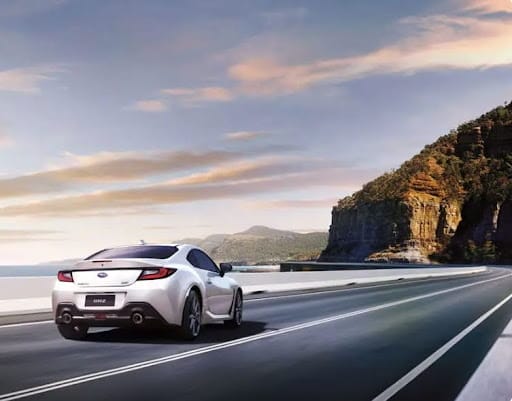
One of the most common misconceptions about the Subaru BRZ is that it’s too impractical for everyday use. In reality, it’s far more usable than its low-slung sports coupe shape suggests.
Behind the wheel, the BRZ feels comfortable and intuitive. The driving position is supportive enough for longer trips. Visibility is better than many expect. And the cabin layout is clean and driver-focused. Basically, everything is where it should be, with minimal distractions pulling your attention away from the road.
The rear seats aren’t designed for adults on long journeys, but they’re far from wasted space. In fact, many owners use them for:
- Extra storage on daily drives.
- Short trips with passengers.
- Bags, jackets, gym gear or track-day equipment.
Beyond the driving position and cabin layout, the BRZ continues to surprise up front and out back. The boot, for example, has enough space for groceries and weekend luggage, making it practical for everyday activities.
To sum it up, the Subaru BRZ is not a family car, and it doesn’t pretend to be. But for drivers who prioritise engagement and enjoyment, it strikes a rare balance between sports car character and everyday usability.
Owning a Subaru BRZ: Reliability and real-world costs
Once the excitement of how the BRZ drives settles in, the next question is a practical one: what’s ownership really like over the long term?
This is where the Subaru BRZ often surprises people again.
At its core, the BRZ is refreshingly uncomplicated. Subaru has deliberately avoided adding turbochargers, mild-hybrid systems or overly complex electronics. Instead, it relies on proven engineering and mechanical simplicity. And that works in the owner’s favour.
The BRZ benefits from:
- A naturally aspirated flat-four engine with fewer heat and pressure stress points.
- Subaru’s long-established boxer engine architecture.
- Straightforward servicing and maintenance requirements.
Without turbochargers or complicated drivetrains to worry about, owning a BRZ is easy to own and maintain. Stick to regular servicing, use quality fluids and drive sensibly, and the car will reward you with reliable performance for years.
Costs are also easier to manage than many expect from a rear-wheel-drive sports coupe:
- Fuel efficiency stays reasonable for everyday driving.
- Insurance premiums are often lower than higher-powered rivals.
- Capped-price servicing removes the guesswork from ongoing maintenance.
Perhaps most importantly, the BRZ doesn’t feel like a car you need to ‘save for special occasions.’ It’s designed to be driven regularly and enjoyed properly, not hidden away in a garage, waiting for the perfect sunny afternoon.
In that sense, the BRZ stays true to its philosophy right through ownership. It’s a sports car that rewards commitment, without punishing you for actually using it.
How the BRZ compares to other sports cars
Many buyers look at the BRZ alongside turbocharged hot hatches or heavier performance coupes. On paper, it can seem less powerful, less flashy or less packed with advanced tech. But that comparison often misses the BRZ’s real strength.
Where many modern sports cars focus on:
- Straight-line speed and horsepower numbers.
- Aggressive styling designed to turn heads.
- Technology overload that can mask the driving experience.
The BRZ takes a different path, prioritising what truly matters behind the wheel:
- Balance that makes corners feel effortless and confidence-building.
- Driver connection through linear power delivery, communicative steering and precise chassis feedback.
- Long-term satisfaction, thanks to predictable ownership, manageable running costs, and a car that’s genuinely fun to drive.
Even when compared with its closest sibling, the Toyota 86, these differences become clear. The BRZ emphasizes sharper handling, subtle chassis tweaks and a slightly more engaged driving feel, which gives enthusiasts a distinct sense of connection that numbers alone simply can’t capture.
If you’re deciding between the BRZ and its closest sibling, our Subaru BRZ vs Toyota 86 comparison highlights the small but important differences behind the wheel.
BRZ technology and features: Purposeful technology for a pure driving experience
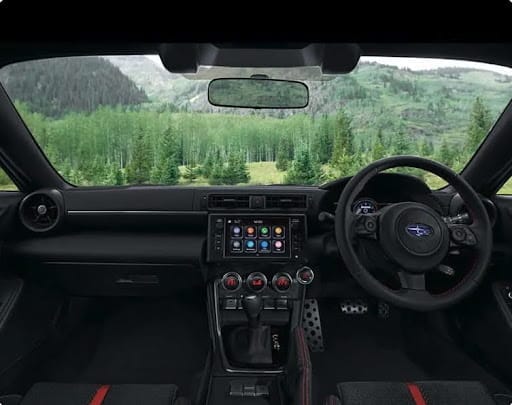
The Subaru BRZ doesn’t overwhelm you with tech. Every feature exists to complement your driving, not distract you from it.
Purposeful cabin layout
- Digital driver display keeps essential info front and centre.
- Simple infotainment system with Apple CarPlay and Android Auto integration.
- Intuitive navigation, music and phone controls, so you stay connected without losing focus behind the wheel.
Subtle safety and driver aids
Subaru EyeSight® suite (on select models) includes:
- Adaptive cruise control.
- Lane departure warning.
- Pre-collision braking.
These features give peace of mind without concealing the car’s natural behaviour.
Thoughtful ergonomics
- Controls are logically placed for intuitive use.
- Seats are supportive and designed for comfort on both short and long drives.
- Every element reinforces the BRZ’s philosophy: technology should enhance the drive, not dilute it.
The result
- City commutes are easier, but the car stays ready for spirited backroad runs.
- Technology is there when you need it, but never gets in the way of the pure connection behind the wheel.
Handling and chassis: Why the Subaru BRZ feels special
If the BRZ has a superpower, it’s the way it handles. Every turn, every corner, every change of direction feels smooth and deliberate. That’s thanks to a combination of chassis design, suspension and Subaru’s low-mounted boxer engine.
Below, we break down exactly what makes the BRZ feel so connected and responsive:
Rear-wheel drive and balance
- Near-perfect weight distribution ensures predictable handling.
- You feel the road through the steering without any twitchiness.
- The car responds honestly to inputs, rewarding smooth, confident driving.
Lightweight, stiff chassis
- Engineers kept the chassis light without sacrificing rigidity.
- Corners feel flat, with minimal body roll.
- The suspension can work effectively, maintaining tyre contact and composure.
Suspension design
- Double-wishbone rear suspension keeps tyres planted in all situations.
- Works equally well in everyday driving, tight city streets or sweeping backroads.
What it feels like on the road
- The BRZ constantly communicates through its steering, chassis and throttle, so you always know how it will respond.
- Whether tackling twisty Perth Hills roads, cruising along the South West coast or navigating city streets, the car feels connected, responsive and alive.
Why drivers love it
- Predictable, poised and responsive handling.
- Every input is rewarded, making driving feel intentional and connected.
- That rare ‘analogue’ driving feel sets it apart from modern sports cars.
Experience the Subaru BRZ for yourself
Reading reviews and guides can only take you so far. The Subaru BRZ is a car that makes sense once you’re behind the wheel.
At City Subaru, we understand what draws drivers to the BRZ. We can talk through ownership expectations, daily usability, and how different variants feel on real WA roads.
When you’re ready, head on down, book a test drive and experience the BRZ the way it was meant to be driven.
Frequently asked questions
How fuel-efficient is the Subaru BRZ for everyday driving?
While the BRZ is a sports coupe, its naturally aspirated flat-four engine keeps fuel consumption reasonable. Most owners find it manageable for daily commuting and longer drives, especially compared with turbocharged or higher-powered rivals.
Is the Subaru BRZ suitable for long trips or weekend getaways?
You bet. The driving position is extremely comfortable for longer journeys, visibility is good, and the cabin layout is intuitive. While the rear seats aren’t ideal for adults on extended trips, they’re perfect for extra luggage or short passenger rides.
Which is better for me: a manual or automatic BRZ?
It depends on your priorities. The manual BRZ rewards drivers who enjoy maximum engagement and precise gear control.
By contrast, the automatic BRZ is more versatile for city commuting, offering paddle shifters and smooth operation without sacrificing driving character. No matter which you choose, both retain the signature balance and connection that the BRZ is known for.
Can the Subaru BRZ be customised or tuned for more performance?
Yes — the BRZ has a strong enthusiast following, and there’s a wide range of aftermarket support for performance, handling, and styling upgrades. Popular modifications include suspension tuning, exhaust upgrades, and ECU tuning to extract more power from the naturally aspirated boxer engine.
Because the Subaru BRZ is mechanically simple and rear-wheel drive, these upgrades are relatively straightforward compared with turbocharged sports cars. Many owners also enjoy subtle visual and interior customisations to make their BRZ uniquely personal, while still retaining the car’s balance and driver-focused character.